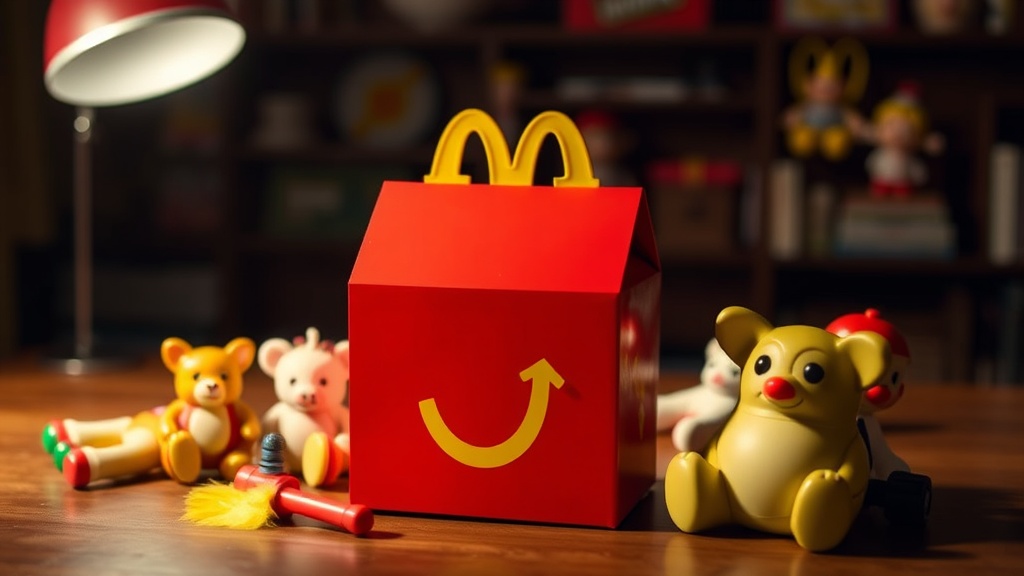
How to Start Your Vintage McDonald's Happy Meal Toy Collection

This guide covers everything needed to build a vintage McDonald's Happy Meal toy collection from scratch — where to find authentic pieces, how to spot valuable rarities, what storage methods protect plastic collectibles, and which sets historically appreciate in value. Whether you're drawn to the nostalgia of 1980s Transformers or the investment potential of limited-edition Disney collaborations, you'll find practical steps to start collecting without overspending or getting scammed.
Where Do You Find Authentic Vintage McDonald's Toys?
The best sources for authentic vintage McDonald's Happy Meal toys include eBay, Etsy, dedicated Facebook collector groups, estate sales, and specialized conventions like ToyCon. Each has trade-offs between price, authenticity guarantees, and selection depth.
eBay remains the largest marketplace for vintage fast-food premiums. Search terms matter here — "vintage McDonald's Happy Meal toy" yields broader results than specific character names that sellers might misspell. Filter by "sold listings" first to understand actual market values before bidding. The thing about eBay? Shipping costs add up fast on bulky lots.
Facebook groups like "McDonald's Collectors Club" and "Vintage Happy Meal Toys" offer something eBay can't — community verification. Members often post authentication requests, and experienced collectors spot reproductions quickly. That said, payment protection is weaker than established marketplaces.
Estate sales and garage sales in older neighborhoods sometimes yield untouched collections at fraction of market value. Hamilton, Ontario — where this collection is based — has proven fertile ground for 1980s and 1990s era toys from original owners. Bring cash, arrive early, and check toy bins thoroughly (sellers often don't recognize McDonald's premiums as valuable).
For high-value pieces, consider Heritage Auctions or Sotheby's entertainment memorabilia departments. These venues authenticate before listing — worth the buyer's premium for four-figure acquisitions.
What Makes Certain Happy Meal Toys Valuable?
Rarity, condition, completeness, and cultural significance determine vintage McDonald's toy values — with factory errors, unproduced prototypes, and international exclusives commanding the highest premiums. Age alone doesn't guarantee worth.
The 1987 Changeables series — transforming food items into robots — regularly sells for $50-$200 per complete, sealed specimen. Why? Nostalgia meets scarcity. McDonald's produced limited quantities before recognizing the promotional power of character tie-ins. Compare this to common 1990s Beanie Babies (millions produced) that struggle to reach $5 despite similar ages.
Errors drive serious collector interest. Double-stamped faces, missing paint applications, reversed assemblies — these factory mistakes create one-of-a-kind pieces. The catch? Documentation matters. A "rare error" without provenance or clear photographic evidence of the manufacturing defect might just be damage.
International releases add another value layer. Japanese McDonald's exclusive Anpanman sets, UK-only Mr. Men premiums, and Australian-market The Wiggles collaborations rarely appeared in North American collections. Import costs and limited distribution created artificial scarcity that persists decades later.
| Factor | Value Impact | Example |
|---|---|---|
| Sealed in original bag | 3-5x loose value | 1992 Batman: The Animated Series vehicles |
| Complete with insert/tray | 2-3x toy-only value | 1988 McNugget Buddies with character cards |
| Factory error | 10-100x standard value | Mismatched limbs on 1990s Disney characters |
| Regional exclusive | 5-20x domestic value | Japanese-only Sailor Moon premiums |
| Prototype/unreleased | $500-$5,000+ | Canceled movie tie-ins, test molds |
How Do You Spot Counterfeits and Reproductions?
Counterfeit McDonald's toys typically show incorrect molding marks, inferior plastic quality, missing copyright stamps, and packaging that lacks the characteristic McDonald's golden arches font and trademark symbols. Learning these authentication markers protects your investment.
Start with the mold markings. Authentic McDonald's premiums manufactured by Fisher-Price, Tyco, or Playmates carry distinct manufacturer stamps — usually on the underside or inside hollow pieces. Reproductions often skip these details entirely or use blurry, shallow impressions. The plastic itself tells a story — vintage pieces used specific ABS formulations that feel denser than modern cheap reproductions.
Packaging provides the strongest authentication clues. Original 1980s-1990s Happy Meal bags featured the "McDonald's" logo in a specific golden arches typeface with ® and ™ symbols precisely positioned. Counterfeit packaging uses similar-but-wrong fonts, missing trademark symbols, or colors that don't match period-accurate printing.
Worth noting: some reproductions aren't malicious — they're modern "homage" pieces or custom works that unscrupulous sellers misrepresent. The Funko Pop-style McDonald's character figures flooding Etsy? Those aren't vintage, and honest sellers label them accordingly. Always ask direct questions about age and origin.
Red Flags in Online Listings
- Stock photos instead of actual item images (common in drop-shipping scams)
- Vague dating — "vintage-style" or "retro collection" rather than specific years
- Prices significantly below market value for claimed rarity
- Sellers with no toy-selling history or feedback
- Descriptions emphasizing "rare" and "collectible" without specific identifying details
How Should You Store and Display Your Collection?
Proper storage for plastic collectibles requires UV protection, stable humidity (40-50%), acid-free materials, and minimal handling — with display options ranging from sealed acrylic cases to dedicated collector cabinets with glass fronts.
Light damage destroys plastic toys gradually. That sunny window display? It'll yellow white plastics and fade painted details within months. UV-filtering acrylic cases — available from BCW Supplies and Ultra PRO — block harmful wavelengths while maintaining visibility. For larger collections, dedicated display cabinets with UV-filtering glass doors offer better space efficiency.
Humidity control matters more than most beginners realize. Plasticizers in vintage toys can leach out in dry conditions, causing brittleness. Excess moisture promotes mold in paper inserts and cardboard backing. A basic humidity monitor ($15-30 on Amazon) helps track conditions. Silica gel packets in storage boxes absorb excess moisture — replace or recharge them quarterly.
Here are the storage approaches that actually work:
- Archival bags: Polypropylene (not PVC) sleeves for individually bagged items — BCW's "Thick Card" sleeves fit most Happy Meal premiums
- Stackable bins: Sterilite ClearView containers with gasket seals, labeled by year or series
- Acrylic risers: For displayed pieces, elevating items improves visibility and reduces dust accumulation
- Climate-controlled rooms: Basements and attics fluctuate too wildly — bedroom closets or dedicated collection rooms work better
Handling protocols prevent damage. Clean hands, ideally cotton gloves, prevent oils from transferring to plastic surfaces. When moving pieces, support the base — many vintage premiums have fragile attachment points (those tiny McNugget Buddies legs weren't built for decades of stress).
Which Vintage Sets Should Beginners Target First?
New collectors should start with complete, affordable sets from the late 1980s through mid-1990s — particularly McNugget Buddies (1988), Changeables (1987-1990), and early Disney collaborations — before pursuing rare prototypes or international exclusives.
The McNugget Buddies series offers perfect entry points. Ten characters released across multiple years, recognizable designs, and reasonable availability in the $10-40 range per piece. Completing a full set provides accomplishment without bankruptcy. The characters — like Rocker McNugget and Sheriff McNugget — have personality that resonates beyond pure nostalgia.
Changeables (later "McRobots" and "McDino") transformed food items into vehicles or creatures. The 1987 original eight-piece set — Big Mac into helicopter, Fries into robot, etc. — represents McDonald's first major foray into "toy as transformation" concepts. Values range widely based on completeness and packaging, but loose, complete pieces appear regularly at $15-50.
Disney collaborations from 1990-1995 hit a sweet spot of cultural relevance and production quality. The Beauty and the Beast (1992), Aladdin (1993), and The Lion King (1994) sets coincided with peak Disney Renaissance marketing. These weren't cheap premiums — they're detailed figures that competed with store-bought toys. Complete sets in original bags command $100-300 depending on condition.
The hobby rewards patience. Rush purchases lead to overpayment and disappointment. Build slowly, research thoroughly, and connect with established collectors who can guide authentication. Hamilton's collector community — active through monthly meetups and online forums — welcomes newcomers willing to learn before spending.
Your collection tells a story. Make it an honest one — authenticated pieces, proper care, and genuine appreciation for the design history these small plastic objects represent. Happy hunting.
Steps
- 1
Research and Identify Popular Vintage Series
- 2
Find Reliable Sources and Sellers
- 3
Clean, Store, and Display Your Collection