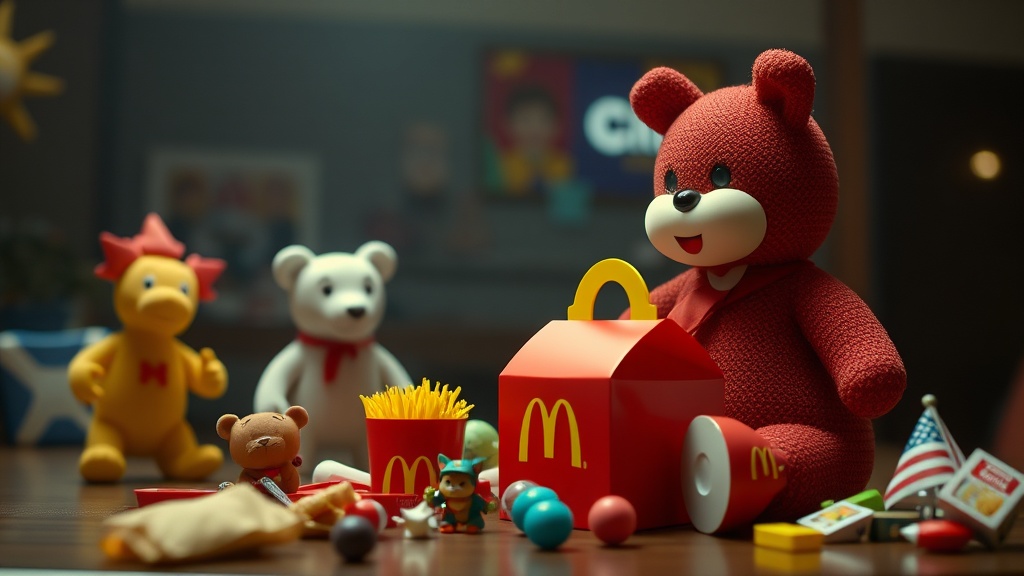
The 15 Most Valuable McDonald's Happy Meal Toys From Your Childhood

What This Post Covers (and Why You Should Care)
This guide breaks down the fifteen most valuable McDonald's Happy Meal toys currently trading in the collector's market — complete with price ranges, condition notes, and the stories behind what made these particular items skyrocket in value. Whether you're cleaning out an attic, browsing estate sales in Hamilton, or just curious about what that old plastic figure might be worth, you'll find concrete answers here. The Happy Meal toy market has exploded over the past decade. Some pieces that sold for pocket change in the 1980s and 90s now command hundreds — occasionally thousands — of dollars. Understanding which toys hold value (and why) can turn a casual thrift store visit into a genuinely profitable afternoon.
Which McDonald's Happy Meal Toys Are Worth the Most Money?
The most valuable Happy Meal toys typically fall into three categories: limited promotional tie-ins with major franchises, region-exclusive releases, and factory-error pieces that somehow escaped quality control. Condition matters enormously — a sealed, unopened toy in original packaging can be worth ten to twenty times more than the same item loose and scuffed.
Here's the thing: nostalgia drives this market more than scarcity alone. Toys tied to beloved childhood properties — Transformers, Teenage Mutant Ninja Turtles, Disney classics — consistently outperform rarer items from forgotten franchises. Collectors aren't just buying plastic; they're buying memories.
The Top 15 Most Valuable Happy Meal Toys
Below are the fifteen most valuable McDonald's Happy Meal toys, ranked by verified sales data from auction sites, collector forums, and dealer price guides. Values reflect near-mint to mint condition; played-with toys typically sell for 60-80% less.
| Rank | Toy | Year | Estimated Value (Mint) | Rarity Factor |
|---|---|---|---|---|
| 1 | Ty Teenie Beanie Babies "Peanut" the Royal Blue Elephant | 1995 | $500 - $1,500+ | Color variant — extremely rare |
| 2 | Transformers Changeables "Optimus Prime" (Gold) | 1989 | $400 - $800 | Limited Canadian release |
| 3 | Inspector Gadget Mobile (Complete with All Parts) | 1999 | $350 - $600 | Multi-part assembly set |
| 4 | Hello Kitty Carrier Plane (Japanese Release) | 2000 | $300 - $550 | Japan-exclusive |
| 5 | Hot Wheels "Purple Passion" Error Car | 1991 | $250 - $450 | Factory paint error |
| 6 | Furby Toys (Full Set of 8) | 1998 | $200 - $400 | Complete series premium |
| 7 | Disney Masterpiece Collection Snow White | 1993 | $180 - $350 | Collector's edition |
| 8 | Super Mario Bros. 3 Happy Meal Set | 1990 | $150 - $300 | Nintendo licensing rarity |
| 9 | Teenage Mutant Ninja Turtles "Mini-Mutant" Figures | 1991 | $120 - $250 | Complete vehicle sets higher |
| 10 | Disney's 102 Dalmatians "Cruella's Car" | 2000 | $100 - $200 | Mechanical feature working |
| 11 | Pokémon 24K Gold-Plated Cards | 1999 | $90 - $180 | Charizard commands premium |
| 12 | Power Rangers Action Figures | 1994 | $75 - $150 | Morphin' feature intact |
| 13 | Babe Toys (Complete Farm Set) | 1995 | $60 - $120 | Surprising cult following |
| 14 | Underwater Monsters (Changeables Series) | 1989 | $50 - $100 | Transformer-style gimmick |
| 15 | Muppet Babies "Baby Miss Piggy" | 1987 | $45 - $90 | Early Happy Meal nostalgia |
Why Are Some Happy Meal Toys Worth Hundreds While Others Are Worthless?
Three factors determine value: scarcity, condition, and cultural staying power. A toy produced in limited quantities for a two-week promotion will always outperform a toy made available for six months nationwide. Factory errors — misprints, wrong colors, missing paint apps — create instant rarity because they weren't supposed to exist.
The catch? Most people threw these toys away. Millions of Happy Meal toys entered landfills in the 80s and 90s. The few that survived in pristine condition — still in their original plastic bags, cards unbent, stickers unpunched — represent a tiny fraction of total production. That survival bias drives prices up.
Worth noting: the "Beanie Babies effect" still lingers. Many collectors remember the 1990s speculative bubble around Ty plush toys. While most Beanie Babies are now worth nothing, the McDonald's Teenie Beanie Babies represent a different category. These were smaller, made specifically for Happy Meals, and certain color variants (like the royal blue Peanut elephant) had production runs measured in thousands — not millions.
Understanding Condition Grading
Before you list anything on eBay, understand how collectors grade Happy Meal toys. The difference between "good" and "mint" can mean the difference between $20 and $200.
- Mint in Package (MIP): Toy is sealed in original plastic bag or box. Card backing (if present) has no creases, bends, or price sticker residue. This commands top dollar.
- Near Mint: Toy was removed from package but shows zero play wear. Paint is perfect. No scuffs, scratches, or discoloration. Original accessories present.
- Excellent: Minor handling marks visible under close inspection. Might have been displayed but not played with. Still displays beautifully.
- Good/Very Good: Played with but complete. Light wear acceptable. No broken parts. Paint mostly intact.
- Fair/Poor: Heavy play wear, missing pieces, broken mechanisms. These have minimal collector value — maybe a few dollars for nostalgia buyers.
That said, even damaged rare toys can hold value. A loose, scuffed Ty Teenie Beanie Baby Peanut (royal blue) recently sold for $180 — well below the $1,500 mint price, but still significant money for a twenty-year-old plastic pellet toy.
Where Should You Sell Valuable Happy Meal Toys?
eBay remains the largest marketplace for vintage toys, but it's not always the best choice. High seller fees (around 13-15% after all charges) eat into profits, and the sheer volume of listings means your item can get buried. For truly valuable pieces — anything over $200 — consider specialized alternatives.
Facebook Marketplace works surprisingly well for local sales in cities like Hamilton, Toronto, and Vancouver. No shipping hassles. No seller fees. Cash in hand. The downside? Lower prices than national auctions and the usual flakes who don't show up.
For serious collectors, Heritage Auctions handles high-end toy sales with proper authentication and grading. They take a commission, but their reach extends to wealthy collectors who won't browse eBay. Another option is Mercari — lower fees than eBay, simpler interface, and a user base specifically hunting for collectibles.
Red Flags When Buying
If you're on the hunt rather than selling, watch for these common scams:
- Reproduction packaging: Sellers create fake "sealed" bags using modern heat-sealing equipment. Authentic McDonald's bags from the 80s and 90s have specific fold patterns and printing characteristics.
- Loose toys being sold as "complete": Many Happy Meal toys came in multiple parts distributed across different weeks. A complete set of four toys is not the same as a complete promotional series.
- Restored paint: Some sellers touch up worn paint with modern markers or acrylics. This destroys value for serious collectors — always ask about restoration.
- "Rare" claims without evidence: Every eBay listing claims rarity. Verify production numbers through McDonald's corporate archives or collector reference books before paying premium prices.
The Hamilton Collector Scene
Hamilton, Ontario has developed a surprisingly active vintage toy community. The monthly Hamilton Toy and Collectible Show at the Convention Centre brings together dealers from across Southern Ontario. McDonald's toys show up regularly — sometimes in bulk lots from estate sales, sometimes as individual high-value pieces.
Local thrift stores like Value Village and Goodwill locations on Upper James and Centennial Parkway occasionally yield gold, though competition has increased as collecting gained mainstream attention. Estate sales in older Hamilton neighborhoods — particularly around Dundas and Ancaster — have produced some remarkable finds from families who saved everything.
Storage Tips for Preserving Value
If you've got valuable Happy Meal toys in your collection, store them properly. UV light degrades plastic and fades paint — keep them in darkness or use UV-protective display cases. Temperature fluctuations cause plastic to become brittle over time. A basement that hits 30°C in summer and 10°C in winter will destroy toys faster than consistent room temperature.
Never use rubber bands to hold accessories together. Rubber degrades into a sticky, plastic-melting goo after a decade. Use acid-free tissue paper or archival plastic bags instead. For card-backed toys, rigid toploaders (the kind used for sports cards) prevent bending and corner damage.
The Future of This Market
McDonald's Happy Meal toys from the 2020s may never reach the values of 1980s and 90s classics. Production numbers have increased dramatically — modern promotions often run into tens of millions of units. Digital tie-ins and app integrations also mean fewer purely physical collectibles.
Here's the thing: collecting is unpredictable. Who predicted that a purple paint error on a Hot Wheels car would be worth $400? Or that Hello Kitty — originally dismissed as a fad — would become a multi-billion dollar cultural phenomenon? The toys that matter in 2040 might be the ones everyone ignores today.
For now, focus on what exists. Check those old boxes in your parents' garage. Browse flea markets with a reference list. Learn to spot factory errors and regional variants. The next $1,000 Happy Meal toy is probably sitting in someone's junk drawer right now — dusty, forgotten, and waiting.