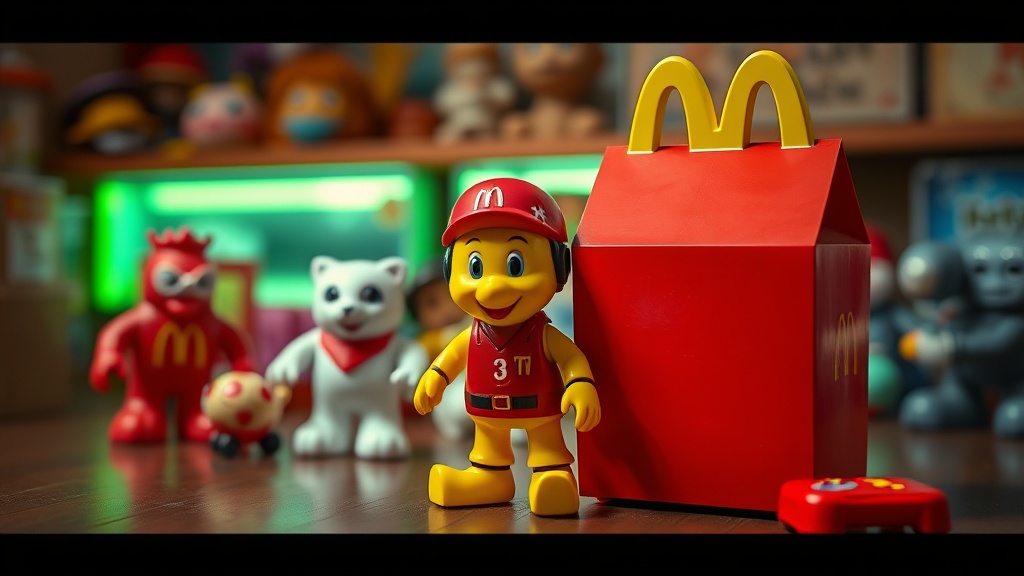
The Ultimate Guide to Collecting Vintage McDonald's Happy Meal Toys

This guide breaks down everything needed to start, grow, and protect a collection of vintage McDonald's Happy Meal toys. Whether hunting for a 1979 McDonaldland Cookie Cutter set or a sealed 1998 101 Dalmatians figurine, you'll learn how to spot value, avoid counterfeits, and buy with confidence.
What Makes McDonald's Happy Meal Toys Worth Collecting?
McDonald's has produced over 15,000 Happy Meal toys since 1979, creating one of the most accessible entry points into toy collecting. The appeal isn't nostalgia alone—it's scarcity, condition, and cultural staying power.
Certain releases command serious money. A mint-in-box 1999 Sega Sonic the Hedgehog set recently sold for over $400 on eBay. The 1987 Fraggle Rock PVC figures—especially Boober in his original bag—regularly fetch $75 to $150 apiece. Even common items from the 1990s, like the Changeables transforming robots, hold steady value because millions of adults now want the toys they lost.
Here's the thing: McDonald's toys were made to be disposable. Most were played with, thrown in toy boxes, or tossed during moves. That means finding undamaged, complete sets gets harder every year. The limited production runs for regional promotions—like the 1994 Dick Tracy watches in Canada or the 2002 Pocket Pikachu exclusive to Japan—create natural scarcity.
Worth noting: condition grading matters just as much in fast-food toys as it does in comic books. A loose figure with paint rubs might sell for $5. The same figure sealed in its original polybag with the Happy Meal box? That could be $80. Collectors use a simplified scale:
- Mint in Package (MIP) — Unopened, no fading, bag or box intact.
- Near Mint (NM) — Opened but undisplayed, all accessories present.
- Good (G) — Play wear visible, minor paint loss, stickers applied.
- Loose/Play Condition — Heavily handled, missing parts, acceptable only for personal display.
Serious collectors store MIP items in archival polypropylene bags inside climate-controlled spaces. Heat and sunlight are the enemy—they yellow plastics and degrade printed cardboard faster than handling ever could.
How Do You Spot Fake Vintage McDonald's Toys?
Counterfeits exist, especially for high-dollar items like the 1992 Batman Returns vehicles and the 1988 Mac Tonight moon man figure. Learning to spot a fake saves money and embarrassment.
Start with the copyright mark. Authentic McDonald's toys carry a © symbol followed by McDonald's Corp. and a year. The font is small, crisp, and molded directly into the plastic—never a sticker. Reproductions often skip the year, use blocky raised text, or place the mark in the wrong spot (under a foot instead of the base, for example).
Paint quality is another dead giveaway. Original McDonald's factory paint is thin, even, and slightly matte. Bootlegs tend to be glossy, thick, or bleeding at the edges. The 1996 Space Jam Bugs Bunny is a common fake—compare the orange basketball in his hand. On the real toy, the ball is a separate molded piece. On knockoffs, it's painted onto a closed fist.
Packaging tells the truth too. Vintage Happy Meal bags and boxes used specific Pantone reds and yellows that are hard to duplicate. The official McDonald's archive doesn't list every promotion, but collector databases like PriceCharting maintain photo records of authentic packaging. If the bag font looks off—or if the toy is sealed in a ziplock-style bag rather than a glued polybag—walk away.
The catch? Some "fakes" are actually legitimate overseas variants. McDonald's toys manufactured for the Asian or European markets sometimes use different plastics or paint schemes. These aren't counterfeits, but they're not the U.S. releases most collectors want either. Always ask the seller for country of origin.
Where's the Best Place to Buy Old McDonald's Happy Meal Toys?
The hunt happens everywhere—flea markets, estate sales, Facebook Marketplace, eBay, and specialized toy shows. Each source has its own rhythm, risks, and rewards.
Estate sales in Hamilton and the broader Golden Horseshoe area can be goldmines. Retirees often kept complete sets in basement storage bins. The key is arriving early (usually Friday mornings) and knowing what you're looking for. A full 1989 Muppet Babies set in a Rubbermaid tote isn't unheard of at a $40 estate-sale lot.
eBay offers the widest selection but also the widest price spread. Use saved searches with terms like "vintage McDonald's MIP," "Happy Meal lot," or specific lines like "1995 Mighty Morphin Power Rangers McDonald's." Check seller feedback carefully. Photos should show the copyright mark, both sides of the packaging, and any flaws.
Facebook Marketplace and Kijiji work best for bulk local deals. Sellers often list "bag of old McDonald's toys" without knowing what's inside. That's where knowledge pays off. A $20 bag might contain a 1993 Jurassic Park dino viewer worth $60 alone.
| Buying Source | Best For | Typical Price Range | Risk Level |
|---|---|---|---|
| Estate Sales | Complete vintage lots, surprises | $10–$100 per lot | Low (you handle it first) |
| eBay | Specific MIP items, rare singles | $5–$300+ per item | Medium (rely on photos/description) |
| Facebook Marketplace / Kijiji | Bulk loose lots, local negotiation | $10–$50 per lot | Medium (no returns, limited photos) |
| Toy Shows (e.g., Toronto Toy Show) | Grading verification, community knowledge | $10–$200+ per item | Low (inspect in person, expert sellers) |
The Toronto Toy Show, held several times a year at the International Centre in Mississauga, draws dealers who specialize in fast-food premiums. Prices run slightly higher than online, but you get to inspect the toy, haggle face-to-face, and ask questions. For anyone serious about the hobby, that's worth the admission fee.
Which Vintage McDonald's Toy Lines Hold the Most Value?
Not every Happy Meal toy appreciates. Some lines—despite being fun—were produced in such massive quantities that supply will never dry up. Others have crossed into genuine collectible territory.
The 1979–1981 McDonaldland series is the holy grail. These were the first official Happy Meal premiums: erasers, stencils, and the now-legendary McDonaldland Cookie Cutters. A complete set of twelve cutters in their display box can sell for $300 to $500. Individual cutters—Ronald McDonald, Grimace, the Hamburglar—move for $30 to $60 depending on paint.
The 1987–1990 era produced some of the most sought-after figures. Fraggle Rock (1987), Camp McDonaldland (1988), and the Super Mario Bros. 3 set (1990) all sit in the sweet spot of strong licenses, smaller production numbers, and durable PVC construction. The Mario set is particularly tricky—Boo the ghost and the Kuribo's Goomba shoe are the hardest to find intact.
Movie tie-ins from the 1990s dominate mid-range collecting. The 1992 Batman Returns vehicles, the 1993 Jurassic Park "Dino-Motion" figures, and the 1996 Space Jam line all have active buyer communities. Disney collaborations—especially The Lion King (1994), 101 Dalmatians (1996), and Toy Story (1995)—remain popular with both toy collectors and Disneyana enthusiasts.
That said, don't sleep on international exclusives. The 1999 Pokémon promotions varied wildly by country. Japan received gold-plated cards and miniature Pokédexes. The U.K. got a set of eight articulated figures not released in North America. Canadian promotions sometimes included bilingual packaging that adds a small premium for completists.
Storage and Display Tips
How a collection is kept affects value more than most beginners realize. Sunlight bleaches red and yellow plastics within months. Basements invite mold and temperature swings. Attics turn rubbery tails into crumbly dust.
The safest approach is simple: airtight bins, acid-free tissue, and stable room temperature. Sterilite gasket boxes work well for bulk storage. For displayed items, IKEA's DETOLF cabinet keeps dust out while allowing visibility. Add a small rechargeable dehumidifier inside if humidity in Hamilton climbs above 55%.
Never use Scotch tape on original packaging. The adhesive yellows and leaves residue that can't be removed. If a polybag has a small tear, leave it alone. Attempted repairs almost always lower value.
Building Community Around the Hobby
Collecting vintage McDonald's toys doesn't have to be a solo hunt. Facebook groups like "McDonald's Happy Meal Toy Collectors" and Reddit's r/happymealcollectors host thousands of members trading photos, IDs, and sale leads. These communities are invaluable when a mystery toy turns up—someone usually knows the year, the promotion, and whether it's common or rare within minutes.
"The best part of this hobby isn't the resale value. It's the hunt—and the people who get excited when you finally find that one Grimace you've been missing for three years." — Finn Tanaka, mcdonaldstoys.blog
Local collector meetups happen across Ontario, often piggybacking on comic cons or toy shows. Bringing a few duplicates to trade is a great way to turn excess inventory into needed pieces without spending cash. Just remember to pack them carefully—nobody wants to swap for a Hamburglar with a broken cane.
Happy Meal toy collecting rewards patience, research, and a willingness to dig through bins that smell like attic dust. The next great find might be sitting in a Hamilton garage sale bin right now, waiting for someone who knows exactly what Grimace looked like in 1981.