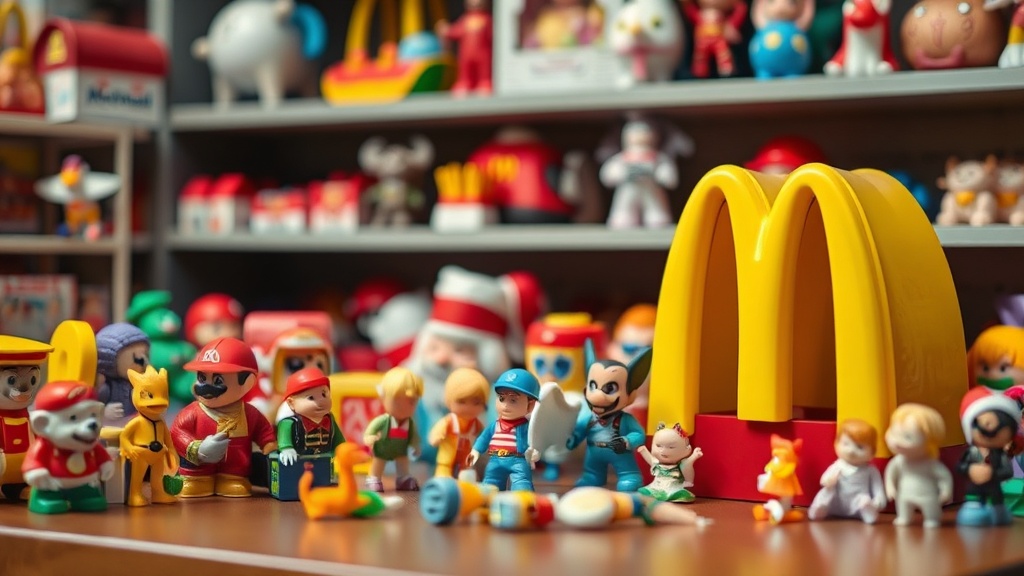
Organizing Your McDonald's Toy Collection by Era and Theme

A collector opens a storage bin only to find a tangled mess of 1990s plastic figurines, a stray 2005 movie tie-in, and a handful of loose pieces from a recent promotional set. Without a system, the collection looks less like a curated archive and more like a junk drawer. This post breaks down how to categorize your McDonald's toys by era and theme to ensure your display looks professional and stays organized.
Organizing a collection is about more than just tidying up. It's about creating a visual history of the brands and characters you love. Whether you're a casual enthusiast or a serious investor, a structured system helps you identify gaps in your collection and prevents duplicate purchases. We'll look at chronological grouping, thematic sorting, and the best ways to display your pieces.
How Should You Organize a McDonald's Toy Collection?
The most effective way to organize your collection is to split it into two primary categories: chronological eras and thematic groupings.
Most collectors find that a hybrid approach works best. You might want to group all your 1990s items together because they share a specific aesthetic, but then sub-divide them by the specific movie or franchise they represent. For example, if you have a large collection of Disney-related items, you might want to keep them separate from your Star Wars or Pokémon sets, even if they were released in the same decade.
Here is a common framework for organizing your items:
- The Era-First Method: Group items by decade (e.g., the 1980s, 1990s, 2000s). This is great for seeing the evolution of the toy quality and materials.
- The Theme-First Method: Group items by franchise (e.g., Disney, Nintendo, or generic animals). This is better for display-heavy collections where you want a "set" look.
- The Size-Based Method: Group by physical dimensions. This is a practical way to manage shelf space, though it's less visually interesting.
If you aren't sure where to start, I recommend looking at the evolution of McDonald's toy themes to see how the styles have shifted over time. It helps to understand the "vibe" of each decade before you start moving things around.
Why Grouping by Era Matters for Collectors
Grouping by era allows you to see the technical shifts in manufacturing and design. A toy from the late 1970s looks and feels vastly different from a high-articulation figure from 2015.
When you group by era, you notice the transition from simple plastic trinkets to more complex, branded collectibles. The 1980s and 90s, for instance, were a golden age for certain types of promotional items. By keeping these together, you can appreciate the specific "feel" of that decade's marketing. It also helps when you're trying to value your collection; collectors often look for "complete eras" rather than just random items.
One thing to watch out for is the material. Older toys might be made of different plastics that react to light and temperature differently than modern ones. If you're interested in the long-term health of your items, you should check out where to keep your plastic figures for long-term preservation. The era of the toy often dictates how much care it needs.
Pro-Tip: Use color-coded bins for different decades. A red bin for the 80s, a blue bin for the 90s, and a green bin for the 2000s makes finding things much faster during a quick search.
How Do You Organize Themed Sets Effectively?
Themed organization involves grouping items based on the intellectual property (IP) they represent, such as a specific movie, cartoon, or game.
This is the preferred method for collectors who enjoy "shelf presence." If you have a collection of Pokémon figures, they'll look much better standing together than if they're scattered among Toy Story characters. This method creates a sense of cohesion. It also makes it easier to spot when you're missing a piece from a specific set.
Consider this comparison table to decide which method fits your style:
| Organization Method | Best For... | Visual Result | Ease of Maintenance |
|---|---|---|---|
| Chronological (Era) | History enthusiasts | Consistent aesthetic | Moderate |
| Thematic (IP) | Display-focused collectors | Highly cohesive sets | High (requires more sorting) |
| Size/Dimension | Small-space dwellers | Uniform look | Very Easy |
The catch? Thematic organization can get messy if a single era has multiple themes. You might have a 1995 era that includes both a Disney set and a generic animal set. In that case, you'll need to decide which "rule" takes precedence. I usually suggest prioritizing the theme for display and the era for storage.
If you want to keep your themed sets in pristine condition, you'll need to be careful with how you move them. Check out my guide on how to keep your Happy Meal toys mint to ensure your organized sets don't suffer from dust or scratches while on display.
Common Pitfalls to Avoid When Sorting
One of the biggest mistakes is ignoring the physical footprint of your toys. A large, bulky figure from a recent promotion might take up the same space as ten small figurines from the 90s. If you only organize by theme, your shelves will quickly become unbalanced.
Another issue is "The Mixed Box." This happens when collectors buy a bulk lot of toys and don't sort them immediately. The longer they sit in a single box, the more likely they are to scratch each other or get stuck together. It's better to spend an hour a week sorting small batches than to spend a whole weekend trying to untangle a massive, unorganized heap.
Also, don't forget about the packaging. If you're a collector who keeps original boxes or bags, these must be treated as part of the "theme." A themed set without its packaging looks different than a complete set with it. Keep your packaging organized alongside the toys to maintain the value and the look of the collection.
If you're worried about the physical state of your items during this process, remember that even the best organization won't help if the environment is wrong. I've written about how to care for your McDonald's toy collection to help you maintain the quality of the pieces you're organizing.
The goal is to create a system that serves you. If you're a person who loves looking at the history of the brand, go with the eras. If you're a fan of specific characters, go with the themes. Just make sure you have a plan before you start digging through your bins.
Steps
- 1
Group by Decade
- 2
Sort by Theme or Franchise
- 3
Arrange by Size and Height
- 4
Label Your Display Sections