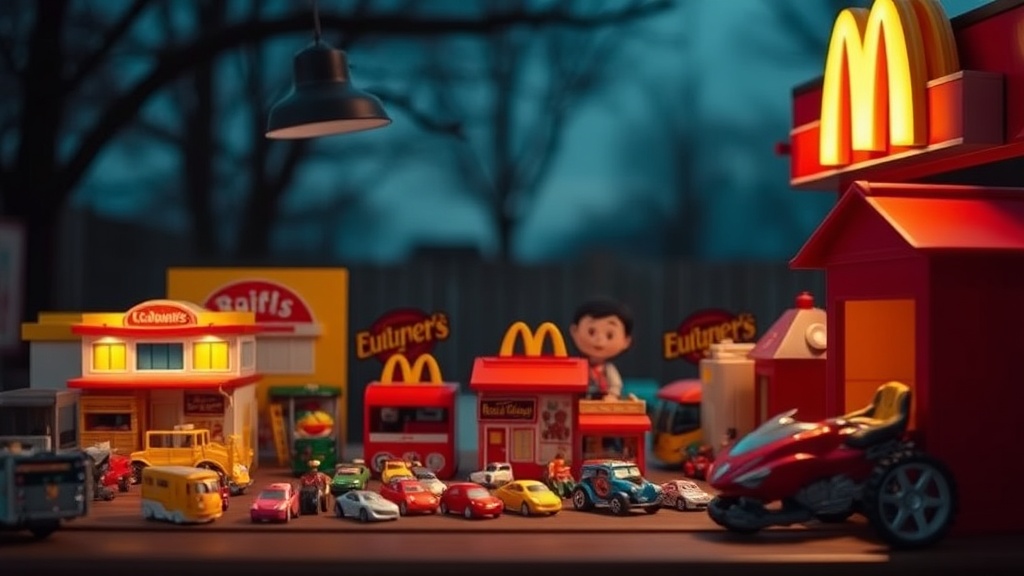
Spotting High Value McDonald's Toy Sets at Garage Sales

According to recent auction data from secondary markets, certain McDonald's promotional sets can appreciate in value by over 500% compared to their original retail-equivalent value. This post examines the specific methodologies for identifying high-value McDonald's toy sets at garage sales, focusing on visual cues, era-specific indicators, and the physical condition markers that separate a common plastic trinket from a collector's prize. You'll find actionable strategies for scanning bins, verifying authenticity, and spotting the rare variants that most casual browsers overlook.
What Makes a McDonald's Toy Valuable?
Value in the McDonald's toy market is driven by scarcity, character popularity, and the pristine condition of the item. While a standard plastic figure from a 2015 promotion might only be worth a few dollars, a complete set of 1980s McDonald's promotional items—like the original Happy Meal tie-ins—can command significant premiums. Collectors look for specific "holy grails" that are often hidden under layers of common household junk at yard sales.
To understand why some items fetch hundreds while others fetch zero, you have to look at the market beyond just nostalgia. If you want to dive deeper into the economics of this hobby, check out my breakdown on understanding the market beyond nostalgia. It's a fundamental part of knowing what to look for when you're digging through a cardboard box in a driveway.
High-value items generally fall into three categories:
- Vintage Eras: Items from the 1970s and 1980s (think early Ronald McDonald or vintage Disney tie-ins).
- Complete Sets: A single figure is rarely worth much, but a full, unplayed-with set of six or eight is a different story.
- Promotional Partnerships: Limited run items from high-profile movie releases or specific brand collaborations.
The catch isn't just finding the toy; it's finding the toy in a state that collectors actually want to buy. A scratched or broken figure is often worth nothing to a serious enthusiast.
How Do I Spot Rare McDonald's Toys at a Garage Sale?
Look for items that are grouped together or kept in their original packaging, as these are much more likely to be high-value. Most garage sale sellers dump everything into "junk bins," but if you see a small plastic bag or a branded box, pay attention. That's often a sign of a complete set rather than a loose, random toy.
Keep an eye out for these specific visual indicators:
The "Shiny" Factor
Newer toys often have a matte finish, but vintage items often have a specific weight and luster. If a toy looks "too" perfect, it might be a modern reproduction. However, if you find a vintage piece that still has its original luster, you've likely found a winner. It's a fine line to walk.
Brand Marks and Copyright Info
Flip the toy over. Most legitimate McDonald's promotional items will have a copyright date or a small embossed logo on the bottom or back. If it's a 1990s toy but has a 2010 date stamped on it, you're looking at a reproduction or a much later, less valuable version. This is a quick way to verify the era of the piece.
The Boxed Set Advantage
If you see a cardboard box that looks like it could be a toy box, don't skip it. Many collectors are willing to pay a premium for "New in Box" (NIB) items. Even if the box is slightly worn, the presence of the original packaging significantly increases the value. This is one of the best ways to start your vintage collection effectively.
| Toy Type | Typical Value (Loose) | Typical Value (Complete/Boxed) | What to Look For |
|---|---|---|---|
| Common 2000s Era | $0.50 - $2.00 | $5.00 - $10.00 | Standard plastic, no wear. |
| 1980s/90s Vintage | $5.00 - $15.00 | $30.00 - $75.00+ | Embossed dates, bright colors. |
| Limited Edition/Promotional | $15.00 - $40.00 | $100.00+ | Rare character, original box. |
Where Should I Look for the Best Deals?
Focus your attention on estate sales and long-time resident garage sales rather than quick "one-day" neighborhood sales. People selling long-term estate items are more likely to have unorganized collections that haven't been sorted by a professional. This is where the "hidden gems" live.
When you're at a sale, don't just look at the toy bins. Check the "miscellaneous" or "toy box" sections. Sometimes, parents or grandparents will toss a box of old kids' stuff into a bin labeled "Toys $1." This is a goldmine for collectors. I've often found much better items in a bin of "old junk" than in a dedicated toy section.
One thing to note—don't be afraid to ask questions. If you see a box of toys, ask the seller, "Did any of these come from a specific era or a collection?" They might not know the value, but they might remember if it was a "special set" or if it came from a specific time period. It's a low-stakes way to gather intel.
If you find something you think is valuable, don't immediately pull out your wallet. Take a photo of the bottom of the toy (the copyright area) and use a quick search to verify. You don't want to overpay for something that is actually a common, low-value piece. This is a skill that develops with time—don't get discouraged if your first few "finds" aren't high-value.
It's also worth noting that many people don't realize the value of these items. A parent might see a box of 1990s McDonald's toys as "old junk" and price them at 50 cents each. That's your opportunity. If you're careful and observant, you can build a high-value collection on a very small budget.
When you do find a winner, make sure you know how to handle it. A single scratch can drop the value of a vintage toy significantly. If you're buying items that look slightly worn, you'll need to be prepared for the upkeep. I've written about how to keep your toys mint, which is a vital skill if you plan on reselling your finds later.
The best way to get better at this is to simply go out and look. The more you see the physical differences between a 1985 toy and a 2005 toy, the faster your eyes will catch them in the wild. It's a game of pattern recognition. Eventually, you won't even have to think about it—you'll just see a certain shade of plastic or a specific shape and know exactly what it is.